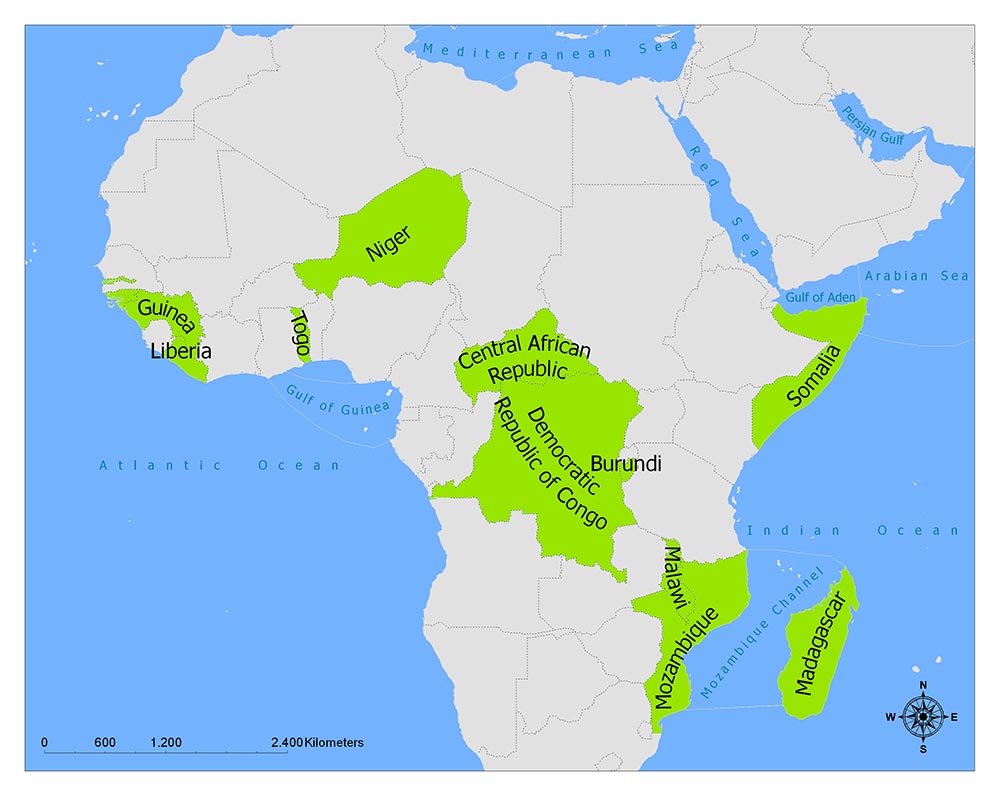
Which is considered the poorest country in Africa? The answer is Burundi.
Burundi is a small landlocked country in the Great Lakes region of East Africa. It is bordered by Rwanda to the north, Tanzania to the east and south, and the Democratic Republic of the Congo to the west. Burundi is one of the poorest countries in the world, with a GDP per capita of just $272 in 2020. The country has been plagued by ethnic conflict and political instability for many years, which has contributed to its poverty.
Burundi's poverty is reflected in its low life expectancy, high infant mortality rate, and low literacy rate. The country also has a high prevalence of HIV/AIDS and other diseases. Burundi is heavily dependent on foreign aid, which accounts for about 50% of its budget.
The international community has been working to help Burundi reduce poverty and improve its economic development. However, the country's political instability and ethnic conflict continue to pose major challenges to these efforts.
FAQs on Poorest Country in Africa
This section addresses frequently asked questions on the poorest country in Africa, shedding light on common concerns and misconceptions.
Question 1: Which country holds the unfortunate distinction of being the poorest in Africa?
Answer: Burundi, a landlocked nation in East Africa, consistently ranks as the poorest country on the continent.
Question 2: What factors contribute to Burundi's persistent poverty?
Answer: Burundi's economic struggles stem from a confluence of adverse factors, including political instability, ethnic conflict, and a heavy reliance on foreign aid.
Question 3: How does poverty manifest in Burundi?
Answer: Burundi's poverty is reflected in its low life expectancy, high infant mortality rate, low literacy rate, and high prevalence of diseases like HIV/AIDS.
Question 4: What efforts are being made to alleviate poverty in Burundi?
Answer: The international community, in collaboration with Burundi's government, is implementing various programs aimed at reducing poverty and fostering economic development.
Question 5: Despite these efforts, why does poverty persist in Burundi?
Answer: Burundi's political instability and ethnic conflict continue to pose significant challenges to poverty reduction efforts, hindering sustainable economic growth.
Question 6: What can be done to improve the situation in Burundi?
Answer: Addressing Burundi's poverty requires a concerted effort to promote peace and stability, strengthen governance, and create opportunities for economic growth.
Summary: Burundi's status as the poorest country in Africa highlights the complex challenges faced by nations struggling with poverty. Understanding the root causes and working towards sustainable solutions is crucial for improving the lives of Burundi's people.
Transition: This concludes our exploration of frequently asked questions on the poorest country in Africa. In the next section, we will delve into specific case studies that provide further insights into poverty reduction efforts.
Conclusion
Our exploration of the poorest country in Africa, Burundi, has shed light on the complex challenges that perpetuate poverty in the region. Political instability, ethnic conflict, and a heavy reliance on foreign aid have hindered Burundi's economic development and impoverished its people.
Addressing poverty in Burundi and other African nations requires a multifaceted approach that promotes peace and stability, strengthens governance, and fosters sustainable economic growth. The international community, in collaboration with African governments, must work together to create opportunities for all citizens and break the cycle of poverty.
The Ultimate Guide: Recording FaceTime Calls With Ease
Keanu Reeves' Staggering Net Worth: Unlocking His Financial Empire
Georgie Farmer Shines On Wednesday!