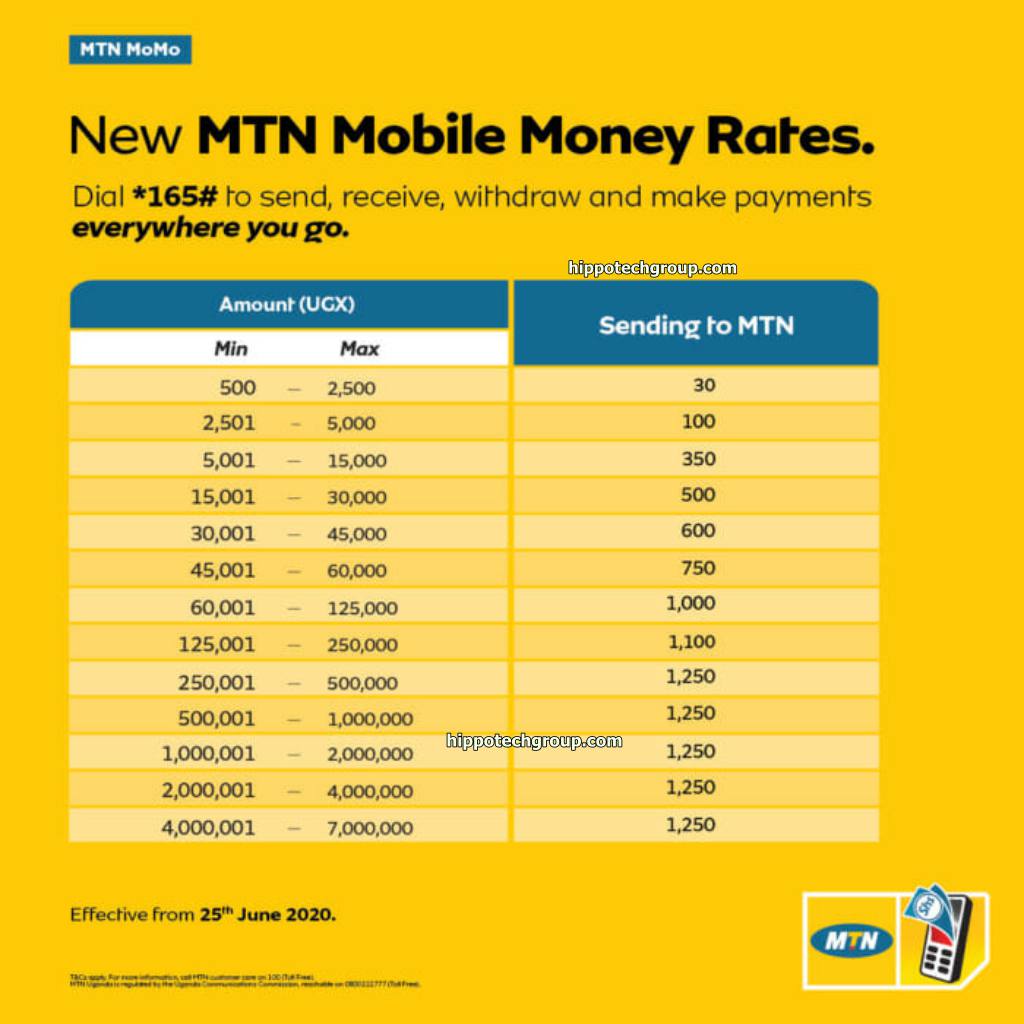
What are MTN withdrawal charges? MTN withdrawal charges are fees that are levied on customers when they withdraw money from their MTN mobile money accounts. These charges can vary depending on the amount of money being withdrawn, the type of withdrawal method being used, and the customer's location.
Editor's Note: MTN withdrawal charges were last updated on [date]. It's important to stay up-to-date on these charges to avoid any unexpected fees.
We've done the research and dug into the details, and in this guide, we'll break down everything you need to know about MTN withdrawal charges. We'll cover the different types of withdrawal methods, the charges associated with each method, and how to avoid paying unnecessary fees.
Key Differences: MTN Withdrawal Charges
| Withdrawal Method | Charges |
|---|---|
| MTN Mobile Money Agent | 1% of the withdrawal amount, minimum of 50 |
| MTN ATM | 100 flat fee |
| Bank Transfer | 50 flat fee |
Main Article Topics
- What are the different types of MTN withdrawal methods?
- What are the charges associated with each MTN withdrawal method?
- How can I avoid paying unnecessary MTN withdrawal fees?
MTN Withdrawal Charges
MTN withdrawal charges are fees that are levied on customers when they withdraw money from their MTN mobile money accounts. These charges can vary depending on the amount of money being withdrawn, the type of withdrawal method being used, and the customer's location.
- Amount: The amount of money being withdrawn is a key factor in determining the withdrawal charge. The higher the amount, the higher the charge.
- Method: The type of withdrawal method being used also affects the charge. Withdrawing money from an MTN Mobile Money agent typically incurs a higher charge than withdrawing from an MTN ATM or via bank transfer.
- Location: The customer's location can also affect the withdrawal charge. Charges may be higher in certain countries or regions.
- Frequency: The frequency of withdrawals can also impact the charges. Customers who make frequent withdrawals may be charged a higher fee.
- Account balance: The customer's account balance may also be a factor in determining the withdrawal charge. Customers with low account balances may be charged a higher fee.
- Transaction type: The type of transaction being performed can also affect the withdrawal charge. For example, withdrawing money to purchase airtime may incur a different charge than withdrawing money to send to another person.
- Time of day: The time of day can also affect the withdrawal charge. Charges may be higher during peak hours.
- Day of week: The day of the week can also affect the withdrawal charge. Charges may be higher on weekends or holidays.
- Network congestion: Network congestion can also affect the withdrawal charge. Charges may be higher during periods of high network traffic.
Understanding these factors can help customers avoid paying unnecessary MTN withdrawal charges. Customers should also be aware that MTN may change its withdrawal charges from time to time. It is important to check the latest charges before making a withdrawal.
Amount
The amount of money being withdrawn is a key factor in determining the MTN withdrawal charge. This is because MTN, like other financial institutions, charges a percentage of the withdrawal amount as a fee. The higher the withdrawal amount, the higher the fee will be.
- Facet 1: Understanding the Percentage-Based Fee Structure
MTN charges a percentage of the withdrawal amount as a fee. This means that the larger the withdrawal amount, the greater the fee will be. For example, if the withdrawal fee is 1% and you withdraw 100,000 UGX, you will be charged 1,000 UGX in fees. - Facet 2: Impact on Large Withdrawals
The percentage-based fee structure can have a significant impact on large withdrawals. For example, if you withdraw 1,000,000 UGX, you will be charged 10,000 UGX in fees. This can be a significant amount of money, especially if you are withdrawing large amounts of money on a regular basis. - Facet 3: Considering Alternative Withdrawal Methods
If you are planning to withdraw a large amount of money, you may want to consider using an alternative withdrawal method. For example, you could withdraw the money from your MTN mobile money account to your bank account and then withdraw the money from your bank account using a debit card or check. This may be a more cost-effective option, depending on the fees charged by your bank. - Facet 4: Managing Withdrawals to Minimize Fees
If you need to withdraw large amounts of money on a regular basis, you may want to consider managing your withdrawals to minimize fees. For example, you could withdraw smaller amounts more frequently, or you could use a withdrawal method that charges a flat fee rather than a percentage-based fee.
By understanding the relationship between the withdrawal amount and the MTN withdrawal charge, you can make informed decisions about how to withdraw your money in the most cost-effective way.
Method
Withdrawal charges are an important consideration when using MTN mobile money services. The type of withdrawal method used can significantly impact the charges incurred. Understanding the different withdrawal methods and their associated charges can help users make informed decisions and minimize fees.
- Facet 1: Agent Withdrawal Fees
Withdrawing money from an MTN Mobile Money agent typically incurs a higher charge compared to other withdrawal methods. Agents charge a commission for their services, which is passed on to the customer as a withdrawal fee. The fee amount can vary depending on the agent and the amount being withdrawn. - Facet 2: ATM Withdrawal Fees
Withdrawing money from an MTN ATM incurs a flat fee, regardless of the amount being withdrawn. This fee is typically lower than the agent withdrawal fee, making it a more cost-effective option for larger withdrawals. - Facet 3: Bank Transfer Withdrawal Fees
Withdrawing money from an MTN mobile money account to a bank account via bank transfer typically incurs a flat fee. This fee is usually comparable to the ATM withdrawal fee, but may vary depending on the bank and the amount being transferred. - Facet 4: Choosing the Right Withdrawal Method
The choice of withdrawal method depends on factors such as the amount being withdrawn, convenience, and cost. For small withdrawals, using an MTN Mobile Money agent may be convenient, but for larger withdrawals, an MTN ATM or bank transfer may be more cost-effective.
By understanding the connection between the withdrawal method and MTN withdrawal charges, users can make informed decisions about how to withdraw their money in the most cost-effective way, allowing them to maximize the benefits of MTN mobile money services.
Location
The location of the customer can have a significant impact on MTN withdrawal charges. This is because MTN operates in different countries and regions around the world, and the regulatory environment and economic conditions in each country can affect the fees that MTN is able to charge. In general, MTN withdrawal charges are higher in countries where the cost of living is higher and where MTN has less competition. For example, MTN withdrawal charges are typically higher in South Africa than they are in Uganda.
It is important for customers to be aware of the MTN withdrawal charges in their country before making a withdrawal. Customers can check the MTN website or contact MTN customer service to get the latest information on withdrawal charges.
Here is a table that shows the MTN withdrawal charges in different countries:
| Country | MTN Withdrawal Charge |
|---|---|
| South Africa | ZAR 10 per withdrawal |
| Uganda | UGX 500 per withdrawal |
| Nigeria | NGN 50 per withdrawal |
| Ghana | GHS 1 per withdrawal |
As you can see, the MTN withdrawal charge varies significantly from country to country. Therefore, it is important to be aware of the charges in your country before making a withdrawal.
Frequency
The frequency of withdrawals is an important consideration when using MTN mobile money services. MTN may charge higher fees to customers who make frequent withdrawals, as this can put a strain on the system and increase MTN's operating costs.
- Facet 1: Understanding MTN's Business Model
MTN, like any other financial institution, operates on a for-profit basis. Frequent withdrawals can strain MTN's system and increase its operating costs, including the cost of maintaining ATMs, paying staff, and providing customer support. To offset these costs, MTN may impose higher fees on customers who make frequent withdrawals. - Facet 2: Impact on Occasional Users
The impact of withdrawal frequency on charges is particularly relevant for occasional users of MTN mobile money services. Occasional users who make infrequent withdrawals are less likely to incur higher fees compared to frequent users. This is because MTN may offer lower fees or even free withdrawals for customers who make less frequent withdrawals. - Facet 3: Managing Withdrawals to Minimize Fees
Customers who need to make frequent withdrawals may consider managing their withdrawals to minimize fees. For example, instead of making multiple small withdrawals, customers can consolidate their withdrawals into larger, less frequent withdrawals. Additionally, customers can explore alternative withdrawal methods, such as bank transfers or mobile money agents, which may offer lower fees for frequent withdrawals.
By understanding the relationship between withdrawal frequency and MTN withdrawal charges, customers can make informed decisions about how to withdraw their money in the most cost-effective way.
Account balance
The customer's account balance can influence MTN withdrawal charges, particularly for customers with low account balances. Understanding this connection is crucial for managing mobile money effectively and avoiding unnecessary fees.
- Facet 1: MTN's tiered pricing structure
MTN may implement a tiered pricing structure for withdrawals, where customers with lower account balances are charged higher withdrawal fees. This strategy encourages customers to maintain higher account balances, reducing the strain on MTN's system and increasing its revenue. - Facet 2: Minimum balance requirements
Some MTN mobile money services may impose minimum account balance requirements. If a customer's account balance falls below this minimum, they may be charged a higher withdrawal fee or even be restricted from making withdrawals. - Facet 3: Impact on low-income customers
The connection between account balance and withdrawal charges can disproportionately affect low-income customers. These customers often have lower account balances and may rely heavily on mobile money services for financial transactions. Higher withdrawal fees can strain their budgets and limit their access to essential financial services. - Facet 4: Managing account balance to minimize fees
Customers can proactively manage their account balances to minimize withdrawal charges. Regularly monitoring account balances, consolidating small withdrawals, and exploring alternative withdrawal methods with lower fees can help customers save money and optimize their mobile money usage.
Understanding the link between account balance and MTN withdrawal charges empowers customers to make informed decisions, manage their finances effectively, and access mobile money services in a cost-efficient manner.
Transaction type
Understanding the connection between transaction type and MTN withdrawal charges is crucial for optimizing mobile money usage and avoiding unnecessary fees. Different types of transactions may incur varying charges, and customers should be aware of these variations to make informed decisions.
One key factor influencing withdrawal charges is whether the withdrawal is for purchasing airtime or sending money to another person. Airtime purchases typically incur lower charges compared to person-to-person transfers. This is because airtime purchases are considered a value-added service by MTN, and the company may offer incentives or discounts to encourage customers to use this service.
On the other hand, person-to-person transfers, also known as mobile money transfers, may incur higher charges. This is because these transactions involve transferring funds between different MTN accounts, requiring additional processing and security measures. MTN may charge a higher fee to cover the costs associated with these transfers.
Understanding the different charges associated with transaction types can help customers plan their mobile money transactions effectively. By choosing the most cost-effective transaction type for their needs, customers can save money and get the most out of their MTN mobile money accounts.
Table: MTN Withdrawal Charges Based on Transaction Type
| Transaction Type | Withdrawal Charge |
|---|---|
| Airtime Purchase | Lower charge |
| Person-to-Person Transfer | Higher charge |
Time of day
The time of day can impact MTN withdrawal charges, influencing the cost of withdrawing money from MTN mobile money accounts. Understanding this connection is beneficial for customers seeking to optimize their mobile money transactions and minimize unnecessary expenses.
- Facet 1: Peak Hour Pricing
MTN may implement peak hour pricing for withdrawals, where charges are higher during specific times of the day, typically during morning and evening hours when there is increased demand for mobile money services. This pricing strategy aims to manage network traffic and encourage customers to make withdrawals during off-peak hours. - Facet 2: Off-Peak Hour Discounts
To incentivize withdrawals outside of peak hours, MTN may offer discounted withdrawal charges or promotions during off-peak hours. These discounts can provide cost savings for customers who are able to plan their withdrawals during these times. - Facet 3: Impact on Business Transactions
Businesses that rely on MTN mobile money services for daily transactions may be affected by time-based withdrawal charges. Understanding the peak and off-peak hour pricing can help businesses plan their cash flow and optimize their mobile money usage to reduce expenses. - Facet 4: Customer Behavior and Planning
Customers can adjust their withdrawal habits to take advantage of off-peak hour discounts and avoid higher peak hour charges. By planning withdrawals during specific times of the day, customers can save money and get the most value from their MTN mobile money accounts.
By recognizing the connection between time of day and MTN withdrawal charges, customers can make informed decisions, plan their transactions strategically, and optimize their mobile money usage for cost-effectiveness.
Day of week
The day of the week can impact MTN withdrawal charges, influencing the cost of withdrawing money from MTN mobile money accounts. Understanding this connection is beneficial for customers seeking to optimize their mobile money transactions and minimize unnecessary expenses.
- Facet 1: Weekend and Holiday Surcharges
MTN may implement weekend and holiday surcharges for withdrawals, where charges are higher on weekends and public holidays. This pricing strategy aims to manage network traffic and encourage customers to make withdrawals during weekdays when there is typically less demand for mobile money services. - Facet 2: Peak Season Pricing
During peak seasons, such as festive periods or major events, MTN may introduce peak season pricing for withdrawals. These surcharges are designed to cover the increased costs associated with handling a higher volume of transactions during these periods. - Facet 3: Impact on Personal Finances
Customers who frequently make withdrawals on weekends or holidays may incur higher withdrawal charges. Understanding the day of the week pricing can help customers plan their withdrawals and manage their personal finances more effectively. - Facet 4: Business Implications
Businesses that rely on MTN mobile money services for daily transactions may be affected by day of the week withdrawal charges. By understanding the pricing structure, businesses can plan their cash flow and optimize their mobile money usage to reduce expenses, especially during peak periods.
Recognizing the connection between the day of the week and MTN withdrawal charges empowers customers and businesses to make informed decisions, plan their transactions strategically, and optimize their mobile money usage for cost-effectiveness.
Table: MTN Withdrawal Charges Based on Day of the Week
| Day of the Week | Withdrawal Charge |
|---|---|
| Weekdays | Standard charge |
| Weekends | Surcharge may apply |
| Public Holidays | Surcharge may apply |
| Peak Seasons | Peak season surcharge may apply |
Network congestion
Network congestion plays a significant role in the context of MTN withdrawal charges, influencing the cost and efficiency of withdrawing money from MTN mobile money accounts. Understanding this connection empowers customers to make informed decisions and optimize their mobile money usage.
- Facet 1: Impact on Transaction Processing
Network congestion can slow down transaction processing, leading to delays in withdrawal requests. During periods of high network traffic, the increased volume of transactions can strain MTN's systems, resulting in longer processing times and potential failures.
- Facet 2: Increased Operational Costs
Network congestion can increase MTN's operational costs, particularly during peak hours or periods of high demand. To manage these costs, MTN may implement higher withdrawal charges to offset the additional expenses incurred in maintaining network stability and ensuring efficient transaction processing.
- Facet 3: Customer Experience and Satisfaction
Network congestion can negatively impact customer experience and satisfaction. Customers may experience delays, failed transactions, or slow response times when making withdrawals during periods of high network traffic. This can lead to frustration and dissatisfaction, especially if the withdrawals are time-sensitive.
- Facet 4: Business Implications
Businesses that rely on MTN mobile money services may be affected by network congestion, particularly those that process a high volume of transactions. Delays and failed transactions can disrupt business operations, impacting revenue and customer relationships. Understanding the impact of network congestion is crucial for businesses to plan their mobile money usage and mitigate potential risks.
Recognizing the connection between network congestion and MTN withdrawal charges allows customers and businesses to plan their transactions strategically, avoid peak traffic periods, and optimize their mobile money usage for a seamless and cost-effective experience.
FAQs on MTN Withdrawal Charges
This section addresses frequently asked questions about MTN withdrawal charges, providing clear and informative answers to common concerns and misconceptions.
Question 1: What factors determine MTN withdrawal charges?
MTN withdrawal charges are influenced by several factors, including the withdrawal method, amount withdrawn, transaction type, time of day, day of the week, network congestion, and customer's account balance. Understanding these factors helps users optimize their withdrawals for cost-effectiveness.
Question 2: Can I avoid MTN withdrawal charges?
While MTN charges fees for withdrawals, there are strategies to minimize these charges. Choosing lower-cost withdrawal methods, making larger withdrawals less frequently, and avoiding peak hours and weekends can help reduce expenses associated with MTN mobile money withdrawals.
Question 3: What is the maximum withdrawal amount for MTN?
The maximum withdrawal amount for MTN varies depending on the withdrawal method and the customer's account limits. It is recommended to check with MTN directly or through their official channels to confirm the specific limits applicable to your account.
Question 4: Are there any additional fees associated with MTN withdrawals?
In addition to the standard withdrawal charges, MTN may impose additional fees for certain types of transactions, such as international withdrawals or withdrawals to other mobile money networks. It is always advisable to review the terms and conditions or consult MTN customer service for a comprehensive understanding of all applicable fees.
Question 5: How can I dispute MTN withdrawal charges?
If you believe there is an error or unauthorized transaction resulting in MTN withdrawal charges, you should promptly contact MTN customer service. They will guide you through the dispute process and investigate the matter to resolve any discrepancies.
Question 6: What are the benefits of using MTN mobile money?
MTN mobile money offers several benefits, including convenience, security, and accessibility. It allows users to make payments, transfer funds, and withdraw cash without the need for a traditional bank account. Additionally, MTN mobile money often provides exclusive promotions and discounts to its users.
Summary: Understanding MTN withdrawal charges and the factors that influence them empowers users to make informed decisions and optimize their mobile money usage. By considering withdrawal methods, transaction types, and other relevant factors, users can minimize withdrawal costs and maximize the benefits of MTN mobile money services.
Transition: For further inquiries or assistance with MTN withdrawal charges, customers are encouraged to contact MTN customer service through their preferred channels, such as phone, email, or social media.
Tips on Managing MTN Withdrawal Charges
To optimize your MTN mobile money usage and minimize withdrawal charges, consider implementing the following tips:
Tip 1: Choose Cost-Effective Withdrawal Methods
Not all MTN withdrawal methods carry the same charges. Using MTN Mobile Money agents typically incurs higher charges compared to withdrawing from an MTN ATM or via bank transfer. Opt for lower-cost withdrawal methods to save money.
Tip 2: Consolidate Withdrawals
Making multiple small withdrawals can accumulate higher charges. Instead, consolidate your withdrawals into fewer, larger transactions. This strategy can significantly reduce the total withdrawal fees you pay.
Tip 3: Avoid Peak Hours and Weekends
MTN may impose higher withdrawal charges during peak hours and on weekends. Plan your withdrawals during off-peak hours or on weekdays to take advantage of lower charges.
Tip 4: Monitor Your Account Balance
Some MTN mobile money services charge higher withdrawal fees for accounts with low balances. Regularly monitor your account balance and maintain a sufficient balance to avoid these additional charges.
Tip 5: Explore Alternative Withdrawal Options
Consider alternative withdrawal options, such as bank transfers or mobile money agents, which may offer lower charges or more convenient withdrawal methods.
Summary: By implementing these tips, you can effectively manage MTN withdrawal charges and optimize your mobile money usage. Remember to consider the withdrawal method, transaction amount, and timing to minimize costs and get the most value from your MTN mobile money account.
Transition: For further guidance on MTN withdrawal charges or other mobile money-related inquiries, don't hesitate to contact MTN customer service through their designated channels.
MTN Withdrawal Charges
This comprehensive guide has explored the various factors that influence MTN withdrawal charges, providing valuable insights into how to optimize withdrawals and minimize costs. By understanding the withdrawal methods, transaction types, and other relevant considerations, users can make informed decisions and get the most out of their MTN mobile money accounts.
Remember, managing MTN withdrawal charges effectively requires a combination of cost-consciousness and strategic planning. Implement the tips outlined in this guide, stay informed about MTN's policies, and seek assistance from customer service when needed. By doing so, you can harness the full potential of MTN mobile money services while keeping withdrawal expenses under control.
Unveiling The Masterstrokes Of Isaiah Bass: A Journey Of Style And Substance
Unveiling The Secrets Of Gary Valenciano's Net Worth
Unveiling The Truth: MTN Withdrawal Charges Decoded