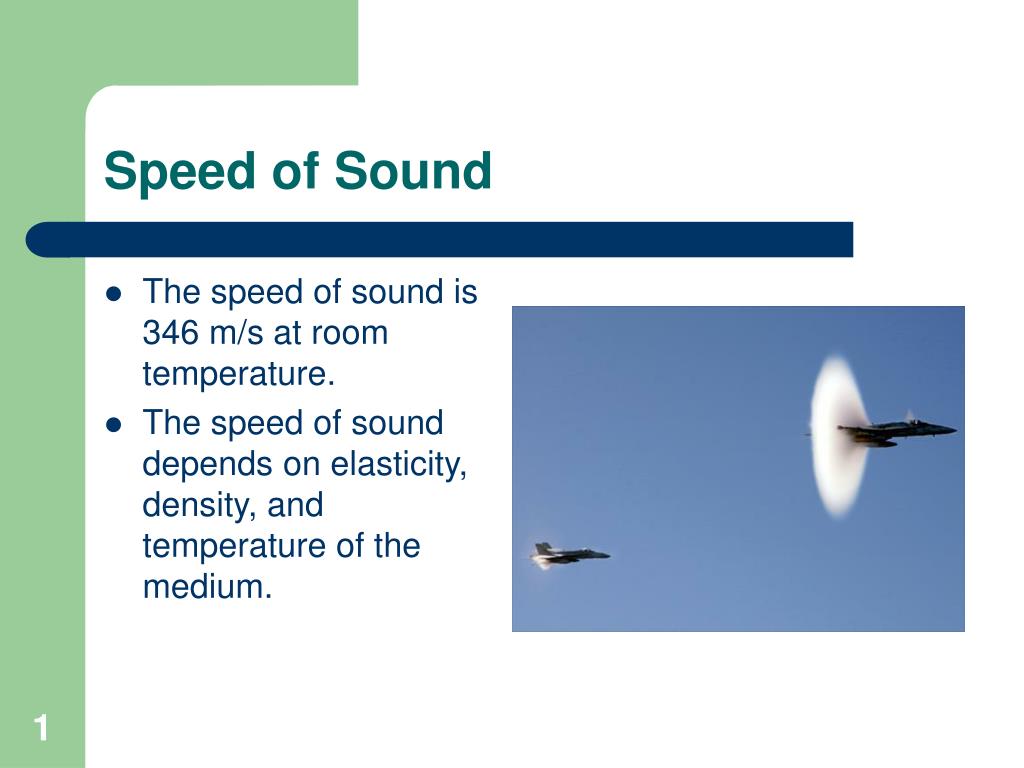
What is the speed of sound in miles per hour? It is the distance traveled by sound in miles per hour. Sound travels at different speeds depending on the medium through which it is traveling. For example, sound travels faster through solids than through liquids and gases. At sea level, sound travels at approximately 767 miles per hour (1,235 kilometers per hour) in air.
The speed of sound is important for many reasons. For example, it is used to calculate the distance to objects by measuring the time it takes for sound to travel to and from the object. The speed of sound is also used in the design of musical instruments and concert halls to create the desired acoustics.
The speed of sound has been studied for centuries. In the 16th century, Italian scientist Galileo Galilei conducted experiments to measure the speed of sound. He found that sound traveled at approximately 1,100 feet per second (340 meters per second) in air. In the 19th century, French scientist Pierre Laplace developed a more accurate formula for calculating the speed of sound. Laplace's formula is still used today to calculate the speed of sound in different media.
The speed of sound is a fascinating and important topic that has a wide range of applications. From calculating the distance to objects to designing musical instruments, the speed of sound plays a vital role in our everyday lives.
FAQs about the Speed of Sound in Miles per Hour
The speed of sound in miles per hour is a fascinating and important topic with a wide range of applications. Here are some frequently asked questions about the speed of sound in miles per hour:
Question 1: What is the speed of sound in miles per hour?Answer: The speed of sound in miles per hour is the distance traveled by sound in miles per hour. At sea level, sound travels at approximately 767 miles per hour (1,235 kilometers per hour) in air.
Question 2: What factors affect the speed of sound?Answer: The speed of sound is affected by the medium through which it is traveling. Sound travels faster through solids than through liquids and gases. The temperature of the medium also affects the speed of sound, with sound traveling faster in warmer media.
Question 3: How is the speed of sound measured?Answer: The speed of sound can be measured using a variety of methods. One common method is to use a sound source and a receiver to measure the time it takes for sound to travel between the two points. The distance between the sound source and the receiver is then divided by the time it took for sound to travel between the two points to calculate the speed of sound.
Question 4: What are some applications of the speed of sound?Answer: The speed of sound has a wide range of applications, including calculating the distance to objects, designing musical instruments, and developing medical imaging techniques.
Question 5: What is the speed of sound in different media?Answer: The speed of sound varies depending on the medium through which it is traveling. Here are some examples of the speed of sound in different media:
- Air: 767 miles per hour (1,235 kilometers per hour)
- Water: 3,432 miles per hour (5,520 kilometers per hour)
- Steel: 16,404 miles per hour (26,396 kilometers per hour)
Answer: Sound cannot travel through a vacuum, so there is no speed of sound in space.
These are just a few of the frequently asked questions about the speed of sound in miles per hour. For more information, please consult a reputable source such as a textbook or scientific journal.
The speed of sound is a fascinating and important topic with a wide range of applications. From calculating the distance to objects to designing musical instruments, the speed of sound plays a vital role in our everyday lives.
Transition to the next article section:
The speed of sound is just one of many interesting and important topics in the field of acoustics. To learn more about acoustics, please continue reading the next section of this article.
Conclusion
In this article, we have explored the speed of sound in miles per hour, covering its definition, measurement, and applications. We have also discussed some of the factors that affect the speed of sound, such as the medium through which it is traveling and the temperature of the medium.
The speed of sound is a fascinating and important topic with a wide range of applications in fields such as engineering, music, and medicine. By understanding the speed of sound, we can better understand the world around us and develop new technologies that improve our lives.
What Do Your Ex Dreams Really Mean? [Expert Interpretation]
Master P's Astronomical Net Worth: A Testament To Hip-Hop's Financial Dominance
What Is He Listening To? The Ultimate Guide To The Iconic Meme